
Bookkeeping for people who don't want to keep books
You don't need to understand debit and credit. You need one system, three habits and someone who speaks up when something doesn't add up.
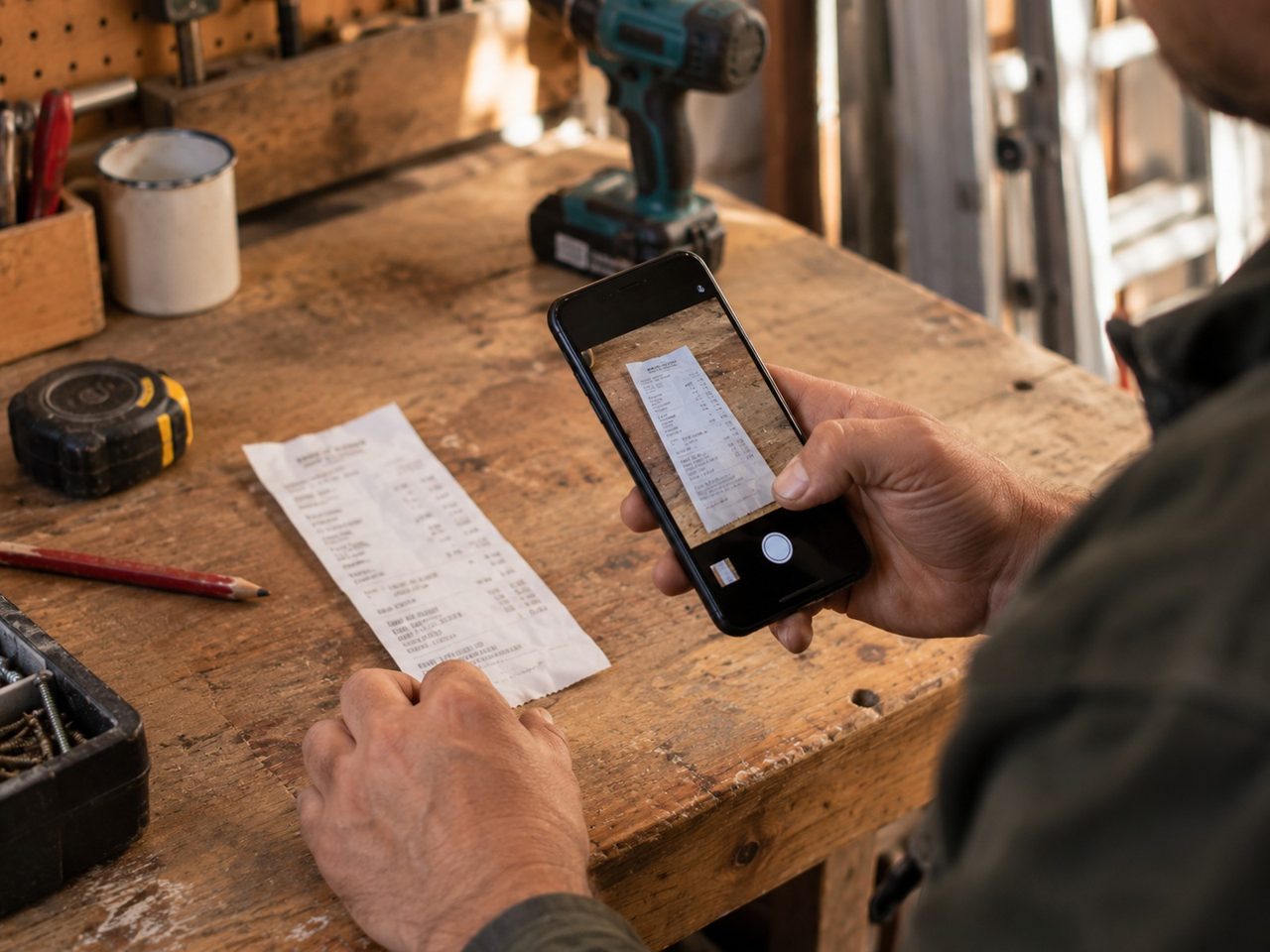
Bookkeeping has a bad reputation because it is explained as a profession. For a small company it is three habits.
Habit 1: Everything that costs money gets a receipt
A receipt, an invoice, a bank statement. Take a photo with your phone the moment you pay. It is not for the accountant's sake; it is because in three months the receipt is gone, and the deduction with it.
Habit 2: The company's money lives in the company's account
Never pay company expenses privately "and get them reimbursed later". Later never comes. One business account, one card, and every single transaction can be matched to a receipt.
Habit 3: Look once a week, not once a year
Ten minutes a week: Are all receipts matched against the bank? Are there overdue invoices? That is the whole exercise. The annual accounts are just the sum of 52 calm weeks.
What a system should actually do for you
- Read the receipt (amount, date, VAT, supplier), so you don't type.
- Match it against the bank, so you don't search.
- Post it to the right account, so you don't choose between 300 account numbers.
- Speak up when something doesn't fit: a receipt without a payment, a payment without a receipt, an amount that differs.
The last point is what separates accounting software from accounts that take care of themselves. Software gives you tools. You want the exceptions.
How LegaSum does it
LegaSum collects the receipts, understands them, matches them against the bank, posts and reconciles. Every night a review runs that writes down what it checked and lists what it could not decide, as one question at a time. You answer the question. The rest has already happened.